

 Registration successful.
 Account activated – Pending validation
 Your account has been activated successfully, but we still need to validate you as a UK healthcare professional. We’ll send you an email with the result. Please note this could take up to 10 days.
 In the meantime, you can enjoy access to all the latest news, events and resources on our website.
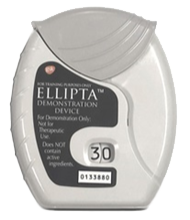
Request a demo device
Help your patients try the Ellipta device by ordering a demo device
Not a healthcare professional and other relevant decision maker? Visit our Public site
Not a healthcare professional and other relevant decision maker? Visit our Public site


has been added to your basket
59

By enabling consistent technique, the patient-centric Ellipta device supports improved use compared with MDIs
(a randomised, open-label cross over study in 567 patients with COPD)1
Trelegy Ellipta (fluticasone furoate/umeclidinium/vilanterol) is indicated as a maintenance treatment in adult patients with moderate to severe chronic obstructive pulmonary disease (COPD) who are not adequately treated by a combination of an inhaled corticosteroid (ICS) and a long acting β2-agonist (LABA) or a combination of a LABA and a long-acting muscarinic antagonist (LAMA).2
Patients with COPD who were naïve to both Ellipta and the comparator device made fewer critical errors using an Ellipta device compared with other common COPD inhalers after reading the PIL*1
*Critical errors are errors that are likely to result in no or significantly reduced or minimal medication being inhaled. Errors after reading the patient information leaflet only.
Randomise, open label, single visit, placebo inhaler, crossover comparison in patients naïve to Ellipta and the comparator inhalers (p<0.001 for all comparisons) n=567
In another trial, the INTREPID trial, the % of patients with ≥1 critical error in inhalation technique at week 24 was: 6% in the FF/UMEC/VI treatment group, 3% in the non-Ellipta multiple inhaler triple therapy group. OR: 1.99; p=0.103 (NS)3
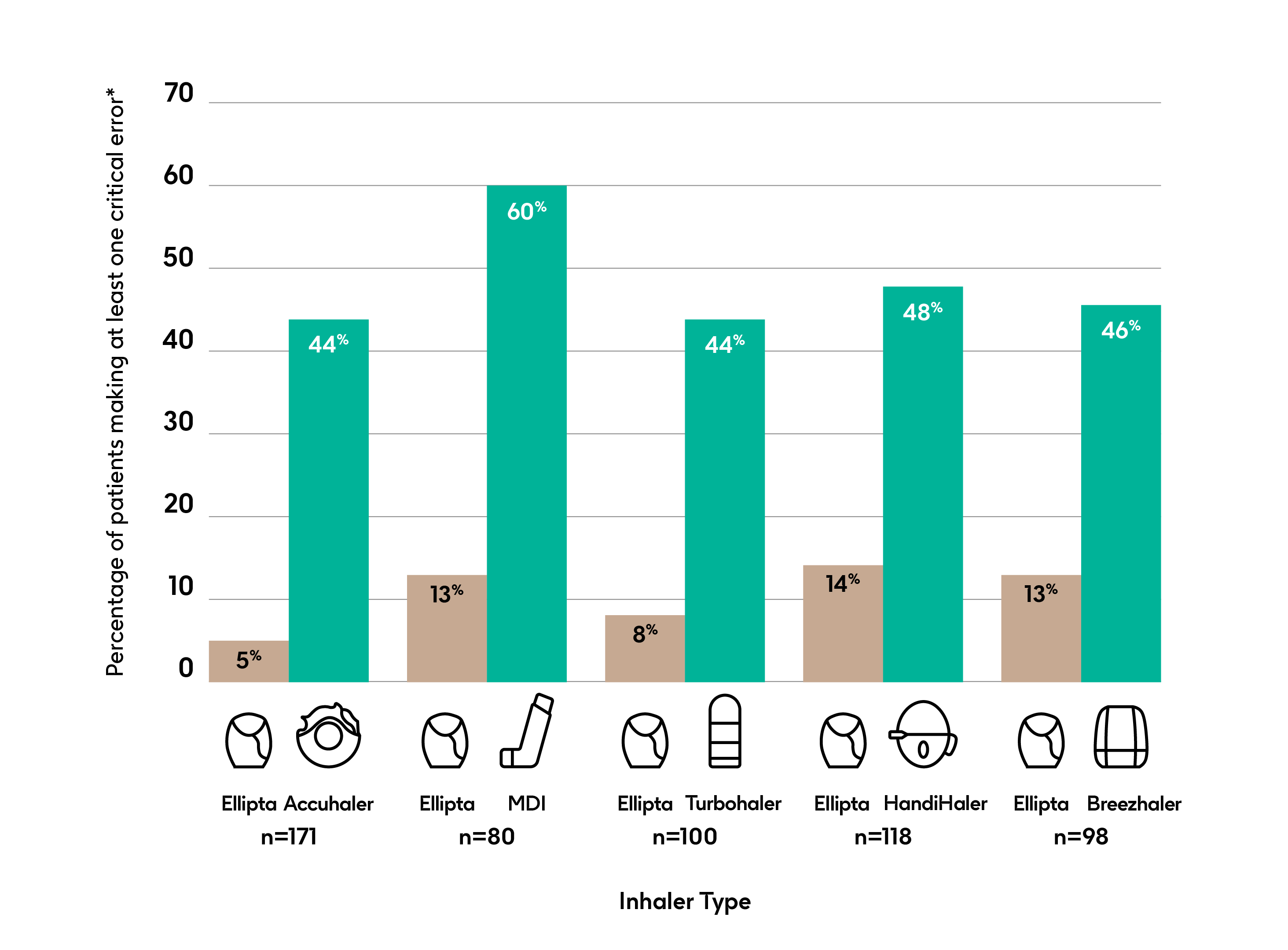
Adapted from Van der Palen J et al (2016).
Help your patients try the Ellipta device by ordering a demo device

With Ellipta, >99% of patients can generate the inspiratory flow required to ensure that even severe COPD patients can get the dose they need5,6
Analysis of spirometry data for 1,951 patients with moderate/severe COPD
*Spirometry PIFR of 50 L/min correlated to a PIFR of 30 L/min for the Ellipta device, a flow rate which has been shown in-vitro to be adequate for appropriate dose delivery7
Treatment effect is not dependent on PIF
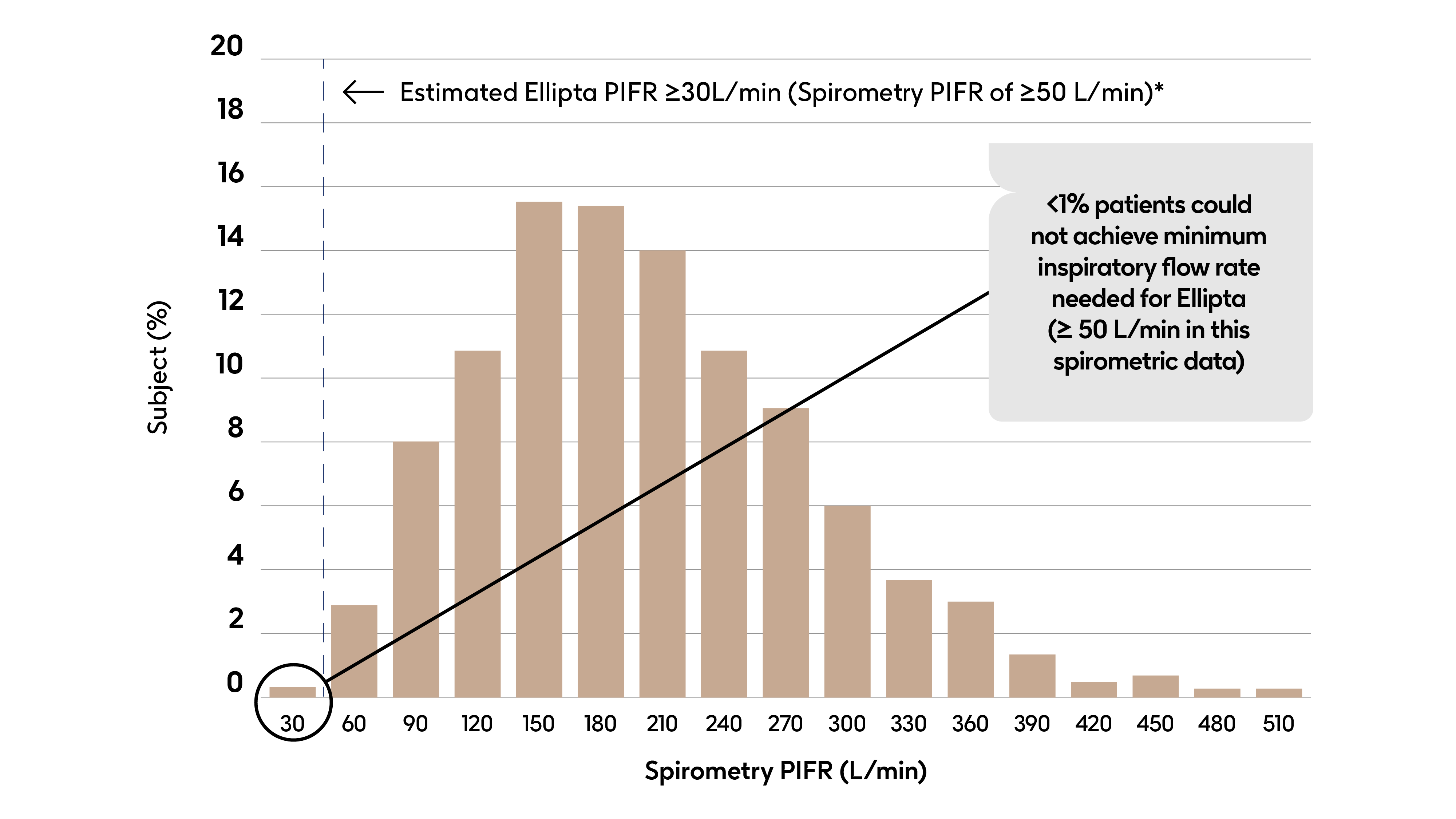
Adapted from Anderson M, 2021

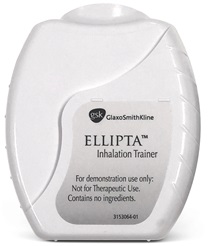
This training whistle helps patients understand the correct inspiratory flow needed to use the Ellipta device. It produces a whistle sound when the necessary inspiratory flow is achieved.
Patients learn to use an Ellipta faster than other common COPD inhalers.1
Open label, single visit, placebo inhaler, crossover comparison in patients naïve to Ellipta and the comparator inhalers. n=567
Time to teach based on reading the PIL followed by nurse instruction if required.
Number of instructions from trained respiratory nurse: After reading the PIL, the majority of patients (57-70%) made no errors using the Ellipta inhaler, thus not requiring instruction from the nurse.1
The majority of patients required nurse instruction for the other inhalers, for example 85% in the case of the MDI.1
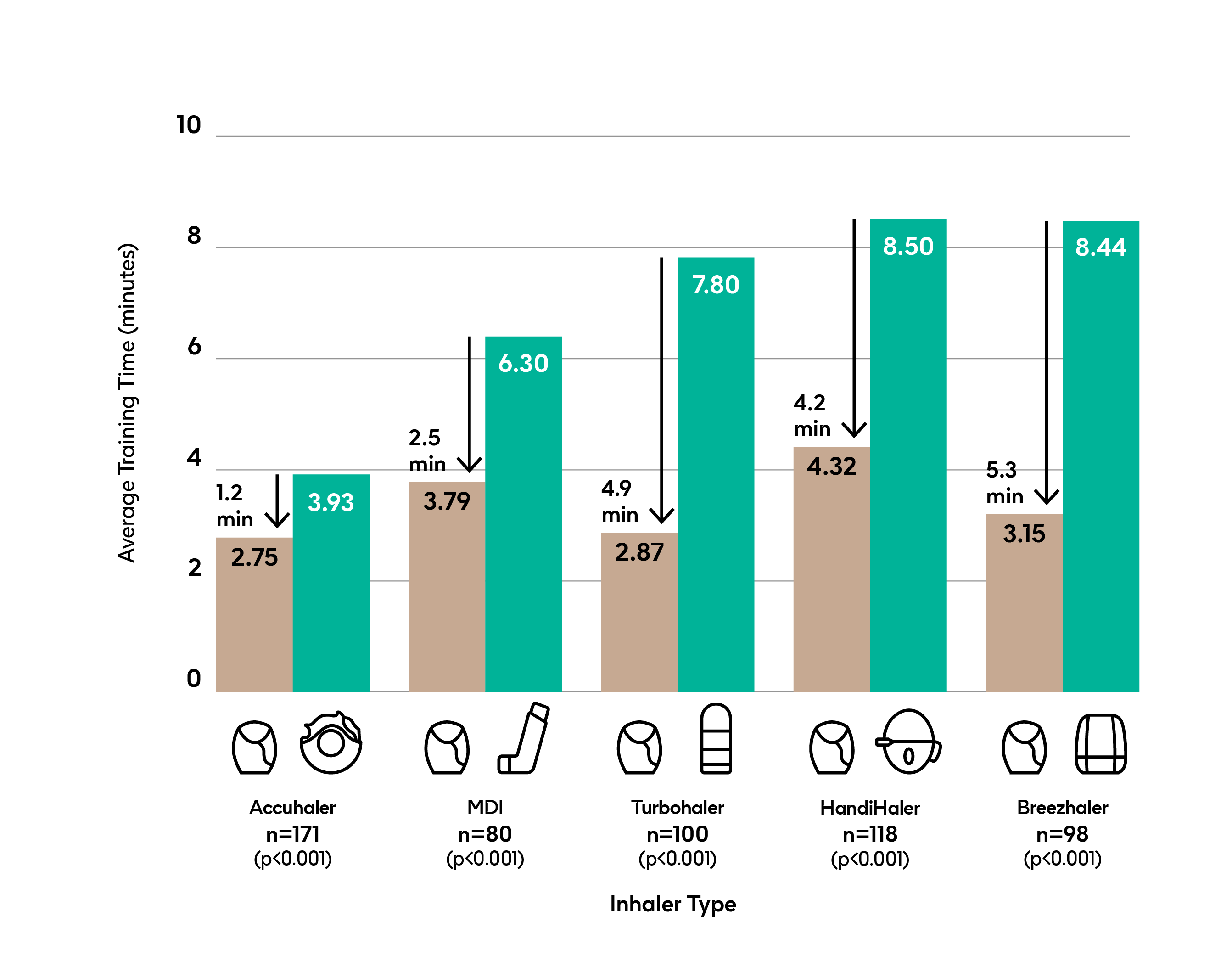
Adapted from Van der Palen J et al (2016).
This guide can support your eligible COPD patients who have been prescribed Trelegy Ellipta
Sustained bronchodilation over 24 hours 12-week, non-inferiority study involving 1017 patients. Data determined in a subcohort analysis (n=148).8

Demonstrated rapid & sustained bronchodilation over 24-hours9,10
Not licensed as a monotherapy in COPD.
Data from a Phase1 study (n=36) on healthy individuals9 and a Phase II study (n=602) on COPD patients10

Up to 24 hour anti-inflammatory activity in vitro11 Clinical significance of the data is not known.
FF is not licenced as a monotherapy in COPD.
Side effects: Common (≥1/100 to <1/10): pneumonia, upper respiratory tract infection, bronchitis, pharyngitis, rhinitis, sinusitis, influenza, nasopharyngitis, candidiasis of mouth and throat, urinary tract infection, headache, cough, oropharyngeal pain, constipation, arthralgia, back pain. Other important side effects include Uncommon (≥1/1,000 to <1/100): viral respiratory tract infection, dysgeusia, dysphonia, dry mouth, fractures, supraventricular tachyarrhythmia, tachycardia, atrial fibrillation, vision blurred, glaucoma, eye pain; Rare(≥1/10,000 to <1/1,000): anxiety, tremor, intraocular pressure increased, muscle spasms, dysuria, hypersensitivity reactions, including anaphylaxis, angioedema, urticaria and rash; hyperglycaemia; palpitations and urinary retention. See Summary of Product Characteristics for other adverse reactions.2
Abbreviations
COPD, chronic obstructive pulmonary disease; FF, fluticasone furoate; MDI, metered dose inhaler; MITT, multiple-inhaler triple therapy; NS, non-significant; OR, odds ratio; PIL, patient information leaflet; UMEC, umeclidinium; VI, vilanterol PIF, peak inspiratory flow; PIFR, peak inspiratory flow rate
References
Adverse events should be reported. Reporting forms and information can be found at https://yellowcard.mhra.gov.uk/ or search for MHRA Yellowcard in the Google Play or Apple App store. Adverse events should also be reported to GSK on 0800 221 441 or UKSafety@gsk.com.
September 2026 | PM-GB-FVU-WCNT-250001 (V2.0)
This browser is not supported and will result in the website not being optimally presented. You are recommended to use an alternate browser such as Chrome, Opera or FireFox

Please update your operating system or use a different device.
